Kitchen steel
Chef knives
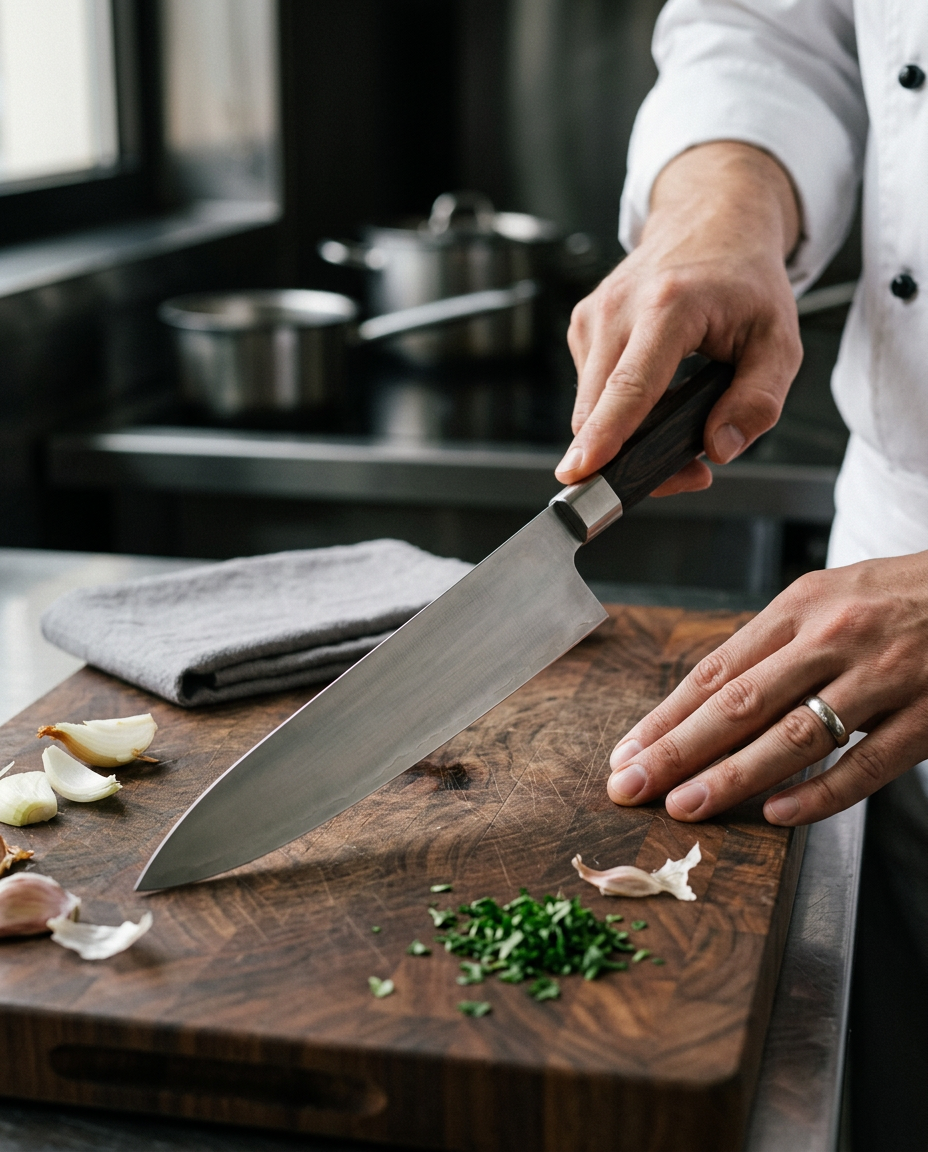
Gyuto, santoku, petty, nakiri and bunka — chosen for how they behave on a board through a long prep, not for how they photograph. Weight, spine thickness and handle style are listed so you can match the knife to your hands.
- Profiles
- Gyuto, santoku, petty, nakiri, bunka
- Common steels
- VG-10, Aogami, Shirogami, SG2
- Handles
- Wa (Japanese) and yo (Western)
- Sharpening
- Whetstone — we teach it free
The rack
Chef on the rack
Opens at launch
Chef listings go live with the first run
We are finishing this run with our smiths. Get on the drop list and you will see the chef pieces — steel, origin, price — before the rack opens publicly.
Our standard
What a chef piece has to pass
Thin behind the edge
We cut carrots and onions with samples. A knife that wedges on a carrot does not make the rack, whatever the steel.
Finished spine and choil
Sharp corners on the spine tear up a pinch grip after twenty minutes. We check every one by hand.
Honest reactivity
Carbon steel will patina and can rust. We say so on the listing instead of hiding it under 'traditional'.
What this is not
These are not dishwasher knives and not for frozen food or bone. If that is your daily reality, a thicker Western workhorse serves you better than a thin Japanese blade.
Read first
Buy this category properly
Straight answers
Chef questions
Gyuto or santoku for a first Japanese knife?
Gyuto if you break down proteins and want one knife for most tasks. Santoku if your board work is mostly vegetables and you like a shorter blade.
Do I need a whetstone?
Yes. Pull-through sharpeners undo the geometry you paid for. A 1000/3000 combination stone is enough to start.
Keep looking