Everyday carry
EDC folders & fixed blades
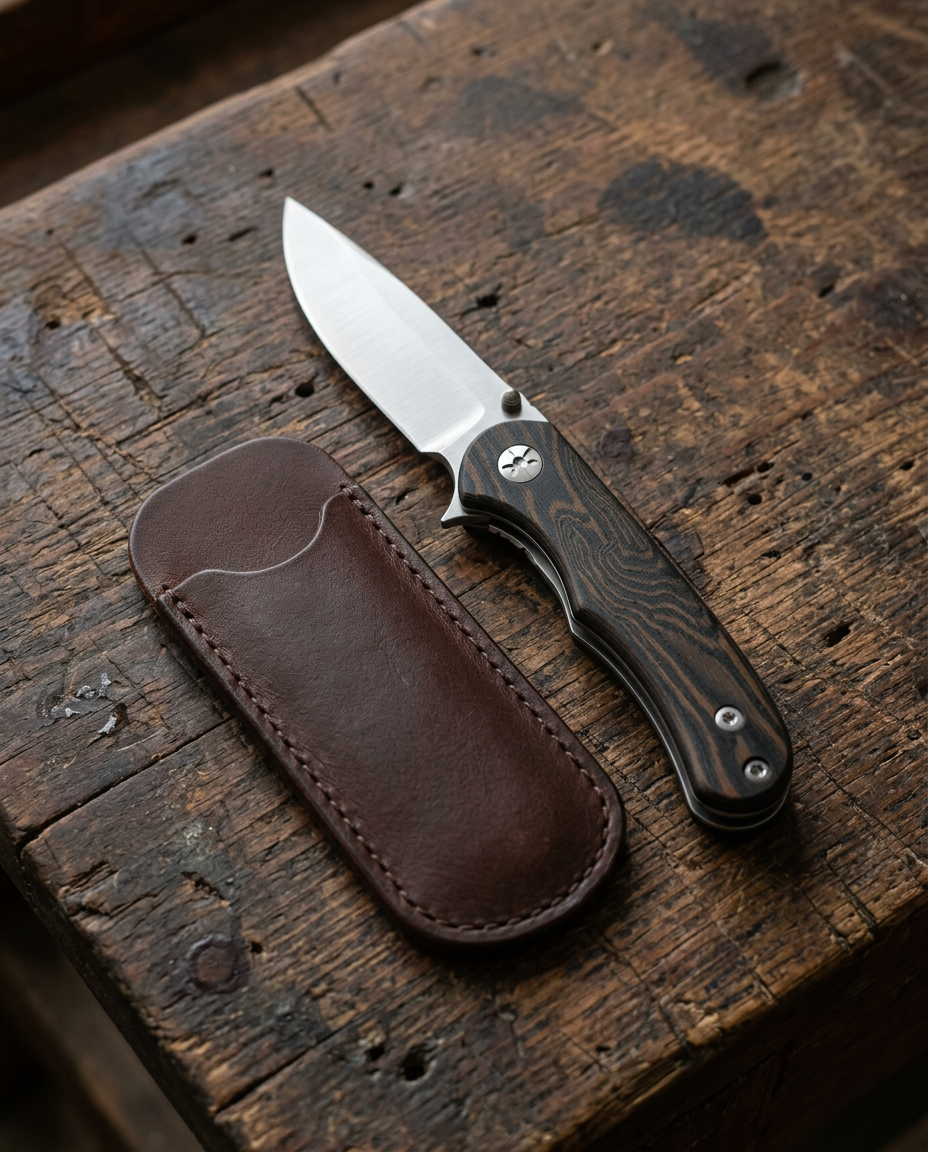
Pocket knives judged on lock-up, detent, centring and steel — the four things that decide whether you keep carrying a knife after a month. Blade steel and hardness are listed as the maker specifies them, or not at all.
- Formats
- Folder, fixed blade, neck knife
- Steels
- S35VN, 14C28N, D2, carbon
- Checked
- Lock-up, detent, centring, play
- Carry
- Clip position and pocket depth listed
The rack
EDC on the rack
Opens at launch
EDC listings go live with the first run
We are finishing this run with our smiths. Get on the drop list and you will see the edc pieces — steel, origin, price — before the rack opens publicly.
Our standard
What a edc piece has to pass
No blade play, either direction
We open and close every sample. Vertical or lateral play in a lock is a rejection, not a discount.
Centred and clean
Blades that rub the liner out of the box tell you how the rest of the knife was assembled.
Hardness with a number
If the maker will not give an HRC range, we list the steel and say the hardness is unstated. No invented figures.
What this is not
Thin, hard EDC steel chips if you pry with it. If you need a pry bar, carry a pry bar — we would rather lose the sale than replace a broken tip.
Read first
Buy this category properly
Straight answers
EDC questions
What steel should I carry?
14C28N or D2 for value and easy sharpening, S35VN if you want longer edge retention and less maintenance. The steel guide breaks down the trade-offs.
Is carrying legal where I live?
Blade length and lock rules vary by city and country. Check your local law before ordering — we cannot ship around a restriction.
Keep looking