Damascus chef knife buying guide: gyuto, santoku and what to spend
6 min read · Updated 2026-08-29
Most people only need one good chef knife. Get the shape and the length right, buy a core steel you can maintain, and the pattern becomes the bonus rather than the reason.
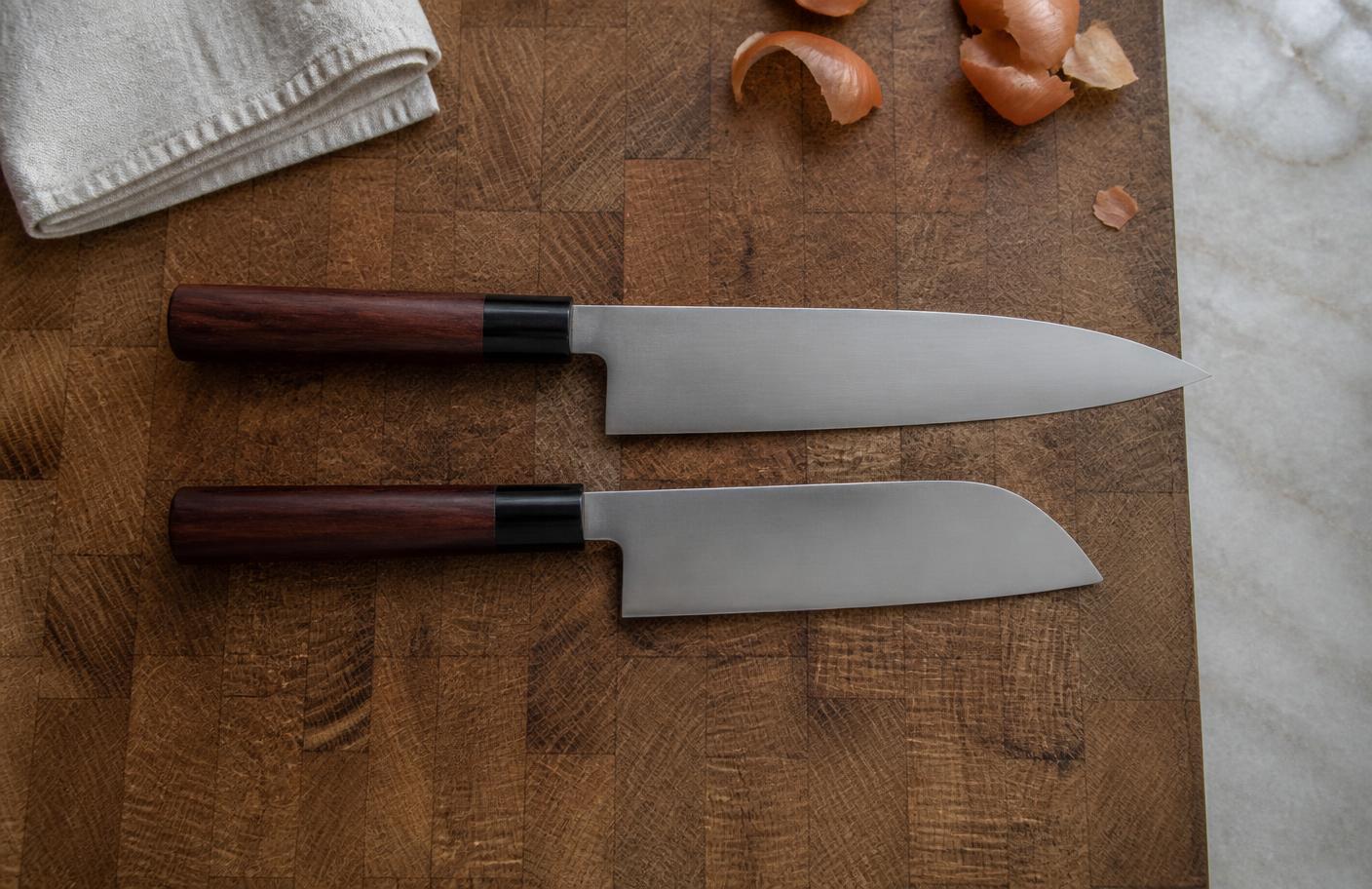
Gyuto vs santoku vs everything else
| Shape | Length | Best for |
|---|---|---|
| Gyuto | 210–240 mm | All-round Japanese chef knife; rock and push cuts, long slicing |
| Santoku | 165–180 mm | Smaller boards and hands; up-down chopping, great first Japanese knife |
| Nakiri | 165–180 mm | Vegetable volume work, flat profile, clean board contact |
| Petty | 120–150 mm | In-hand detail work, garlic, shallots, trimming |
| Sujihiki | 240–270 mm | Slicing proteins in one clean pass |
What each price bracket buys
| Bracket | What you get |
|---|---|
| $120–$200 | Honest stainless-clad VG-10 or AUS-10 Damascus, solid grind, machine-finished handle |
| $200–$400 | Better core steel and heat treat, hand-thinned grind, quality wood or resin handle |
| $400–$800 | Named maker, hand-forged billet, refined food release, distinctive pattern work |
| $800+ | One-off collector work: rare billets, custom fittings, maker signature |
Three questions before you pay
What is the core steel? What hardness is it heat treated to? Who ground the bevel? A seller who cannot answer is reselling anonymous stock.
Handles, weight and balance
- Wa (Japanese octagonal) handles are lighter and shift balance toward the hand — nimble, easy to re-handle
- Western bolstered handles feel heavier and more familiar for long service shifts
- Balance should sit at or just ahead of the pinch grip, not out at the tip
- Thinner spine behind the edge matters more than total weight for how a knife feels cutting
If you cook on a small board in a small kitchen, a 180 mm santoku will make you happier than a 240 mm gyuto you cannot manoeuvre. Buy for the board you actually have.
Straight answers
- Is a Damascus chef knife worth it?
- If the core steel and heat treat are good, yes — you get a knife that holds an edge and looks like a piece of work. Buying pattern alone is how people end up disappointed.
- Gyuto or santoku for a first Japanese knife?
- Santoku at 180 mm for small boards and chopping-led prep; gyuto at 210 mm if you want one knife to handle everything.
- What hardness should a Damascus chef knife be?
- Around 60–62 HRC is the sweet spot for kitchen Damascus: keen and long-lasting without being brittle at the edge.
Next step
Put it to work on a real blade
Every knife on our rack lists its steel and origin, so you can apply everything above before you buy.