The craft
Pattern is proof of work
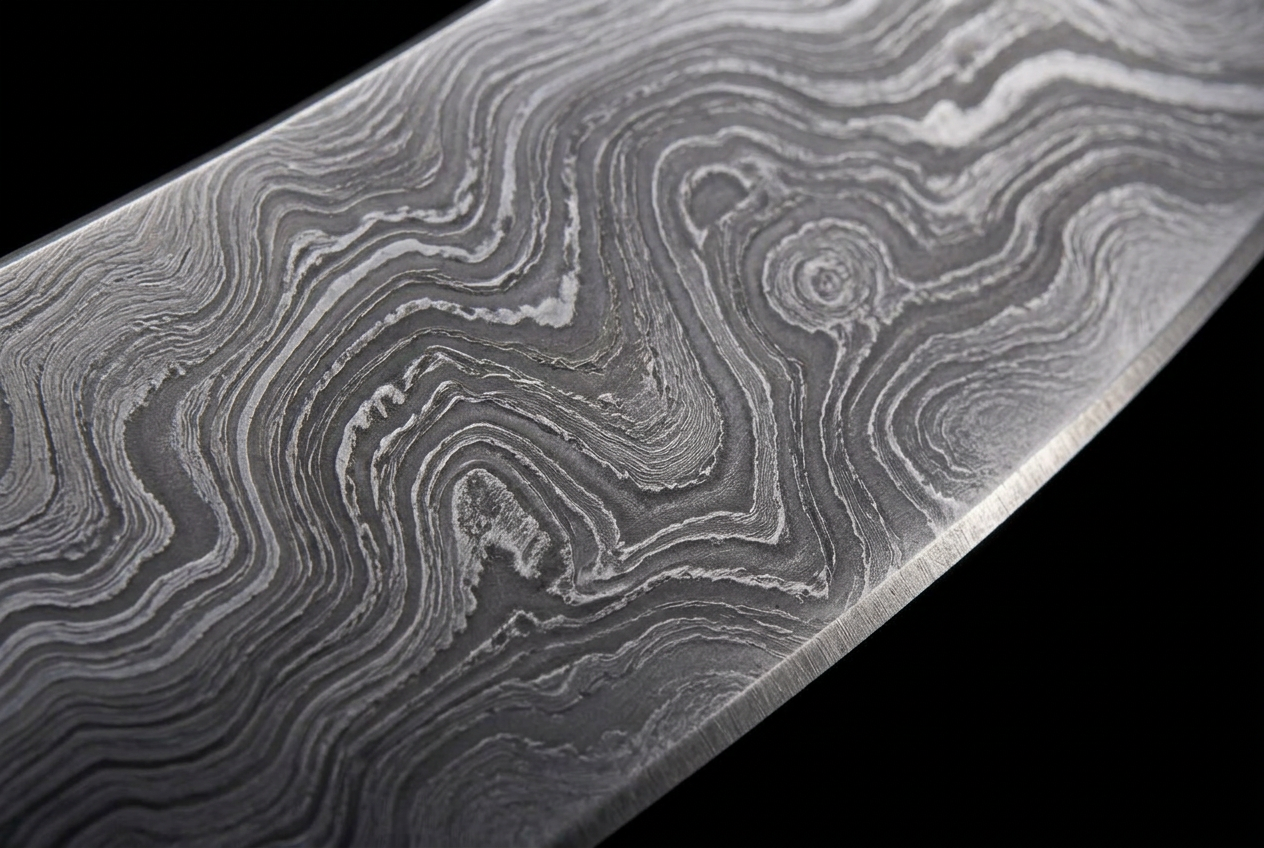
Damascus isn't a coating or a look. It's pattern-welded steel: two or more alloys forge welded together, folded, and manipulated until the layers themselves draw the pattern. What you see on the flat of the blade is a record of every fold the smith made.
- 01
Stacking the billet
Alternating layers of hard and tough steel are cleaned and stacked. The mix is the recipe — it decides how the finished pattern reads and how the edge behaves.
- 02
Forge weld
The stack goes to welding heat and gets set with the hammer until the layers become one bar. Any dirt or gap here becomes a flaw you'll find years later.
- 03
Draw and fold
The bar is drawn out, cut, folded and welded again. Each cycle doubles the layer count. Ladder, raindrop and twist patterns are cut and manipulated at this stage — not printed.
- 04
Shaping and heat treat
The blade is forged to profile, normalized, hardened and tempered. Heat treat is where a knife is won or lost: it sets hardness, toughness and edge retention.
- 05
Grind, etch, finish
Bevels are ground, then an acid etch eats the softer layers slightly to reveal the pattern. Handles are fitted last — stabilized wood, micarta, horn or leather.
Authenticity
How to tell real from printed
- Look at the edge and the spine. A true pattern-welded blade shows the same layering on the cutting edge and the spine, not just on the flats.
- Watch for repeats. Laser-etched or chemically stamped "Damascus" repeats identically along the blade. Forged pattern drifts and distorts around the tip and belly.
- Ask about heat treat. A maker who can tell you their hardening and tempering numbers is a maker who did the work.
- Layer count should be specific. "About 200 layers" is a real answer. "Thousands" usually isn't.