Carbon steel knife care: patina, rust and daily habits
6 min read · Updated 2026-09-02
Carbon steel takes a sharper edge, sharpens faster and feels better on the stones than stainless. The price is attention: it reacts to food, water and air, and it will tell you loudly if you leave it wet.
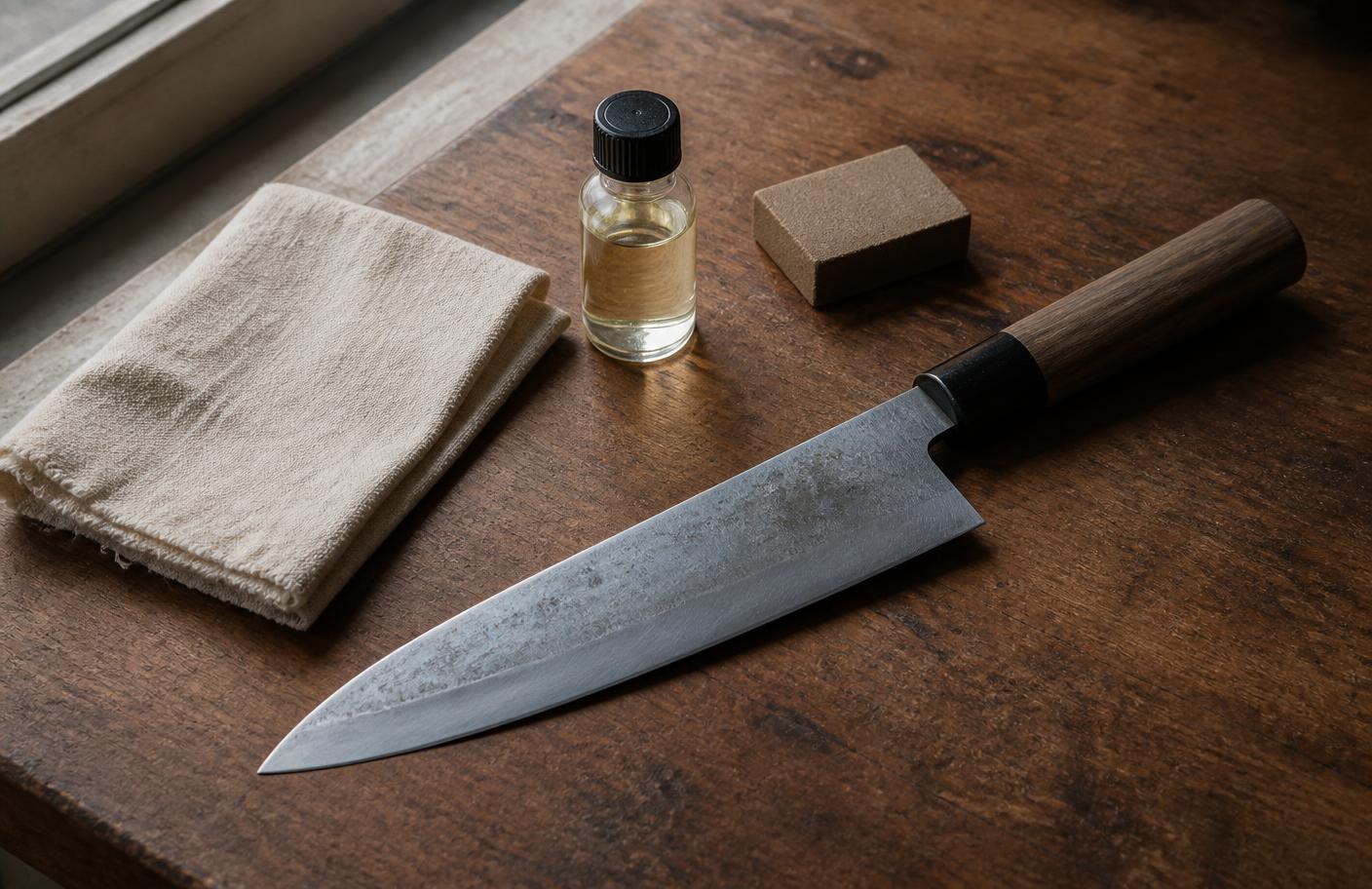
The daily routine, honestly stated
- 01Wipe the blade between acidic tasks — onions, tomatoes, citrus, anything vinegary.
- 02Wash by hand in warm water with a drop of mild soap immediately after use.
- 03Dry the whole knife on a towel: face, spine, choil and handle joint.
- 04Leave it out to air for a few minutes before it goes into a saya or block.
- 05Wipe on a thin film of camellia or mineral oil if it is going away for more than a week.
Patina is protection, not damage
A patina is a stable layer of black-blue iron oxide that forms as carbon steel reacts with food. It is not rust. Rust is orange-red, powdery and pitting; patina is dark, smooth and passive, and it slows further corrosion. A well-used carbon blade should look grey-blue and mottled within a month. That is the knife working correctly.
| Patina | Rust | |
|---|---|---|
| Colour | Grey, blue, purple-black | Orange to red-brown |
| Texture | Smooth, bonded to the steel | Powdery, lifts off, leaves pits |
| Effect | Slows corrosion | Eats steel and dulls the edge |
| Action | Leave it alone | Remove now |
Forcing a patina in one evening
- 01Degrease the blade fully with hot soapy water and dry it.
- 02Warm yellow mustard, strong vinegar or hot black coffee — pick one.
- 03Dab mustard in a pattern with a cotton swab, or stand the blade edge-up in a tall vessel of coffee or vinegar for 20–40 minutes.
- 04Rinse, dry completely, then repeat once if the layer is patchy.
- 05Finish with a light oil. Expect the colour to keep evolving with use.
Never soak a wooden handle
Force a patina on the blade only. Submerging a wa handle or a hidden tang swells the wood, loosens the fit and lets water sit against the tang where you cannot dry it.
Removing rust without wrecking the finish
- Fresh light rust — oil plus a wine cork or hardwood block, rubbed spine-to-edge.
- Stubborn spots — a paste of baking soda and water with a soft cloth, then dry and oil.
- Deeper spots — Flitz or a similar metal polish, worked in one direction, accepting a slight shine change.
- Never a wire brush, angle grinder or coarse sandpaper on an etched or hand-polished finish.
- Pitting that catches a fingernail is permanent. Stabilise it, oil it, keep using the knife.
Storage that actually prevents problems
- Dry saya, magnetic strip or slotted block — never a sealed sheath while damp.
- Avoid leather sheaths for long-term storage; tanning residue holds moisture against steel.
- 40–55% relative humidity is the target range for a storage or display space.
- For months of storage, oil heavily and wrap in oiled paper, not plastic film.
- Check stored blades every few weeks. Two minutes now beats a polish later.
Straight answers
- Is carbon steel worth the maintenance?
- If you cook often and wash by hand, yes — it sharpens faster and holds a keener apex. If knives sit in a wet sink, buy stainless-clad and enjoy your life.
- Can I put a carbon steel knife in the dishwasher?
- No. Heat, detergent and standing water will rust the blade and can crack a wooden handle in a single cycle.
- Does a patina affect the taste of food?
- A stable patina does not. Active orange rust and a bare, freshly sanded blade can leave a metallic note on very acidic ingredients.
- What oil is safe for a kitchen carbon blade?
- Food-grade mineral oil or camellia oil. Avoid cooking oils like olive or vegetable — they polymerise and turn sticky.
Next step
Carbon, or clad? Buy the one you will actually maintain
Each listing states whether the blade is full carbon or stainless-clad, and every knife we sell comes with the care card that matches its steel.