What is a Damascus knife? Types, real vs fake, and who it's for
5 min read · Updated 2026-11-20
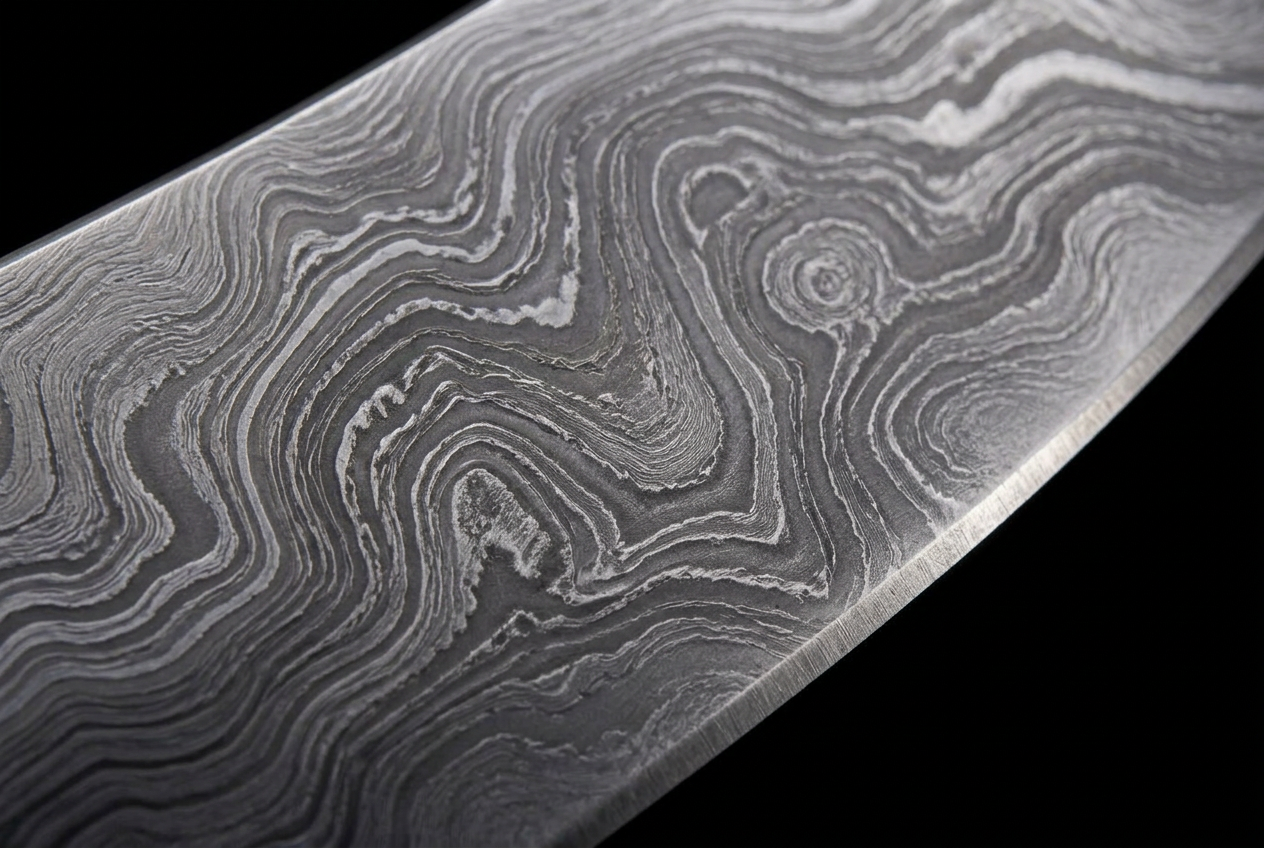
A Damascus knife is a knife whose blade is made from two or more steels forge-welded into one bar, folded or manipulated, then etched in acid so the layers show as a pattern. The pattern is part of the steel — not a print or a coating.
The short answer
- What it is: a blade of layered, forge-welded steel, etched to reveal the layers
- What it is not: a single steel grade, a hardness rating, or automatically stainless
- What decides performance: the core steel, the heat treatment and the grind
- What the pattern tells you: how the smith built the billet, and that the blade is genuine
Types of Damascus knives
| Type | How it's built | Best for |
|---|---|---|
| Clad (san-mai) Damascus | Layered Damascus outside, a single hard core steel at the edge | Kitchen knives — the core cuts, the cladding looks good and adds toughness |
| Full pattern-welded | Layered steel all the way through, edge included | Hand-forged hunters, bowies and collector pieces |
| Stainless powder Damascus | Stainless powder steels layered by a mill (e.g. Damasteel) | Premium EDC folders that need to resist sweat and rust |
| Etched or printed 'Damascus' | Single steel with a pattern laser-etched or acid-printed on the face | Not real Damascus — avoid if you are paying for the real thing |
How to tell a real Damascus knife from a fake
- 01Look at the spine and tang. Real layers continue around the edges; a fake pattern stops at the flat face.
- 02Check the listing. An honest seller names both steels in the billet, or the core steel on a clad blade.
- 03Look for repeats. Real patterns are organic; a fake often repeats the same tile across the blade or across knives.
- 04Check the price. Sub-$40 mirror-pattern knives are almost always etched.
More layers is not a better knife
Layer count changes the look. A clean billet with a correct heat treat cuts better than a messy high-count one. Judge the core steel and the grind first.
Who a Damascus knife is for
- Home cooks who want a sharp, stainless-clad chef knife that is also a pleasure to look at
- EDC carriers who want a folder with character — pick a stainless Damascus or a stainless core
- Collectors who value the maker, the pattern and the story behind the billet
What a Damascus knife costs
Factory-made stainless-clad Damascus kitchen knives generally start around $100–$150. Hand-forged blades and named makers cost more, with collector pieces reaching well into the hundreds or thousands. Handle material, layer work and the maker's reputation drive the price above that.
Caring for one
Hand wash with mild soap, dry right away, and keep carbon Damascus lightly oiled. Never use the dishwasher. Acidic food left on the blade dulls the etch, which can be restored with a light re-etch. See our full care and sharpening guides for the details.
Straight answers
- Is a Damascus knife better than a regular knife?
- Not automatically. A Damascus knife with a proven core steel and a good heat treat is excellent; the layers themselves add looks and show the blade was forge-welded, not extra sharpness.
- Do Damascus knives rust?
- Carbon Damascus can rust if left wet. Stainless-clad blades with a VG-10 or AUS-10 core, and stainless powder Damascus, are far more forgiving.
- Why is Damascus steel so expensive?
- Forge-welding, folding and patterning a billet takes many hours of work and wastes material. Etched fakes are cheap because they skip all of it.
- What is the difference between Damascus steel and a Damascus knife?
- Damascus steel is the layered material. A Damascus knife is any blade made from it — fully pattern-welded, or with Damascus cladding around a separate core.
Next step
See it with the specs listed
Every Damascus blade we carry names the core steel, layer count and origin.