Sword care and display: oiling, handling and storage
6 min read · Updated 2026-08-31
A sword is a long piece of carbon steel with a lot of surface area and, usually, an organic hilt. Almost all damage collectors see comes from three things: bare hands on the steel, humidity, and storing it in the wrong position.
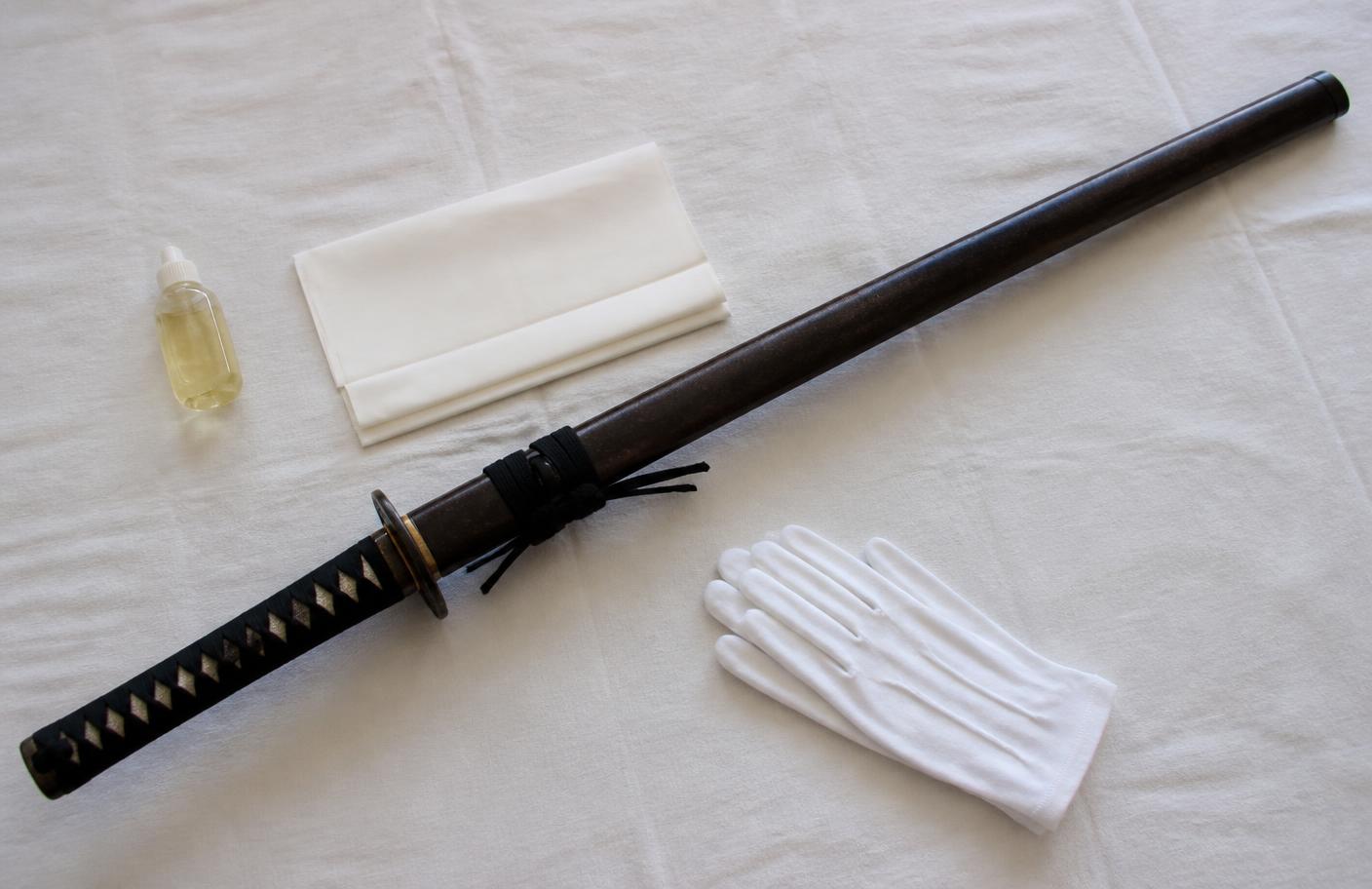
Handling without leaving marks
- 01Draw and sheathe with the edge up and the blade supported — never let the edge drag inside the scabbard.
- 02Keep bare fingers off the polished steel; skin oils etch as fingerprints within days.
- 03Hand it to someone else hilt-first, blade edge away, with both hands.
- 04Wipe down with a clean, lint-free cloth every single time it comes out, even briefly.
The oiling routine
- Every 3 months in a dry, climate-controlled room; monthly in humid or coastal air
- Remove the old oil with a soft cloth, working spine to edge, never across the edge
- Apply a very thin film of choji or plain mineral oil — a shine, not a coat
- Do not oil the hilt wrap, the wooden core or leather fittings; keep those dry
- Wipe the scabbard mouth clean so old grit does not scratch the polish
Humidity is the real threat
Keep a display room between 40% and 55% relative humidity. Above that, carbon steel rusts under the oil; below that, wooden fittings shrink and crack.
Rust, scratches and when to stop
Light surface rust can be lifted with oil and a bone or hardwood tool. Anything deeper — pitting, active red rust in the hamon area, or scratches through a hand polish — is a job for a polisher, not a garage fix. Abrasives permanently destroy a traditional polish, and a botched cleanup costs more than the rust ever would.
Display and storage
- Horizontal on a stand, edge up, is the safest long-term position
- Vertical display lets oil pool at the tip and pull dust into the scabbard
- Keep it out of direct sunlight and off exterior walls where condensation forms
- Never store long-term inside a sealed leather or plastic case — they trap moisture
- For dust protection use a breathable cotton sword bag, not shrink wrap
Legal and safety basics
Swords are collector and display pieces. Check your state and local rules on carry and transport before moving one, keep it stored out of reach of anyone under 18, and transport it sheathed in a closed case. We ship swords with an adult signature required on delivery.
Straight answers
- What oil do you use on a katana?
- Traditional choji oil (mineral oil with a trace of clove) or plain food-grade mineral oil. Apply a film thin enough that it reads as a shine rather than a wet coat.
- How often should a sword be oiled?
- Every three months in dry indoor air, monthly in humid climates, and immediately after any handling with bare hands.
- Should a sword be displayed edge up or edge down?
- Edge up, horizontal, on a proper stand. It keeps the edge off the stand, prevents scabbard wear and stops oil migrating to the tip.
Next step
Put it to work on a real blade
Every knife on our rack lists its steel and origin, so you can apply everything above before you buy.